
Cooking with Confidence: A Guide to Kitchen Safety for Aging in Place
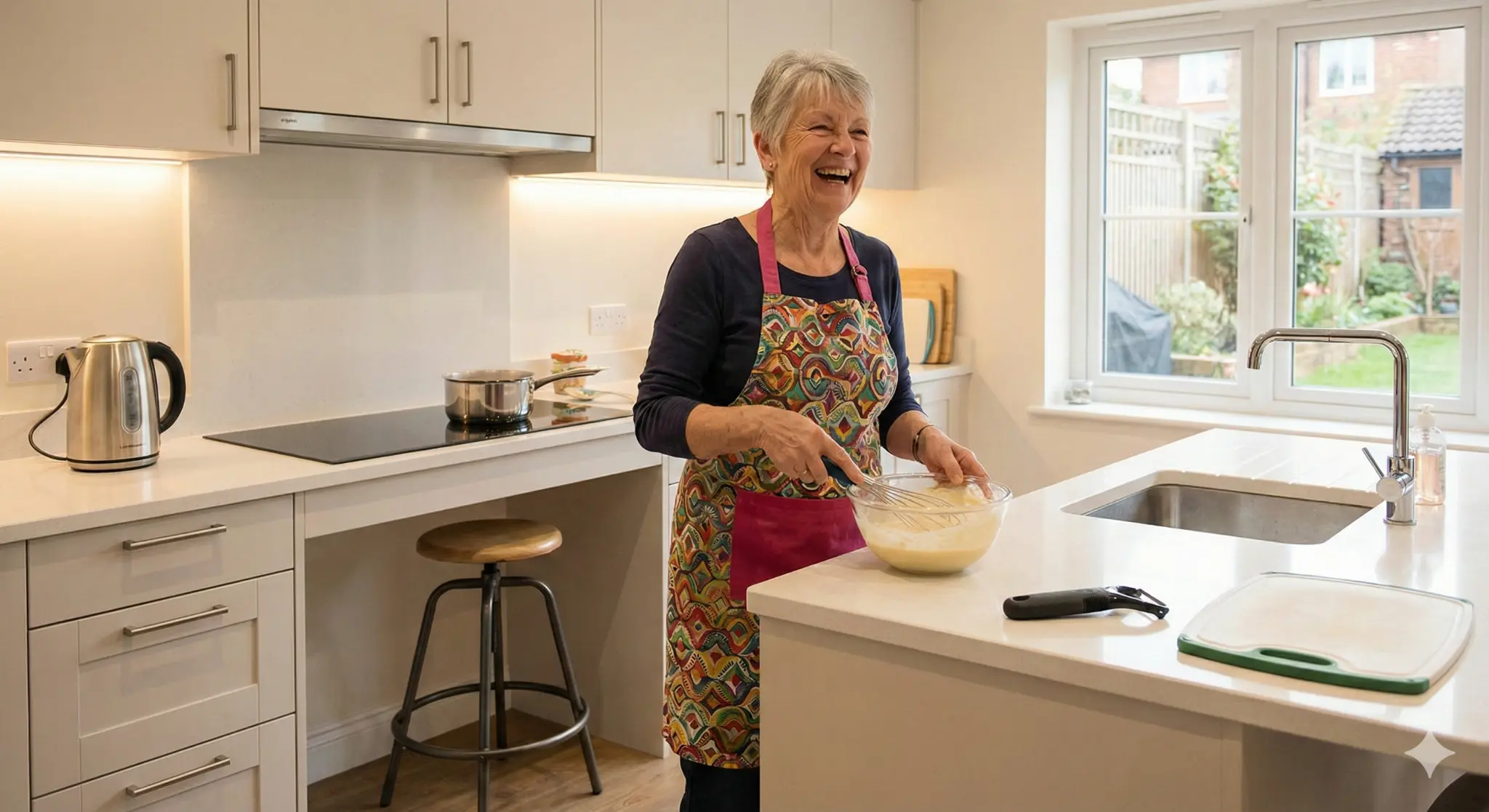
Cooking with Confidence: A Guide to Kitchen Safety for Aging in Place
For many of us, the kitchen is the heart of the home. It’s where we nourish ourselves, experiment with new flavors, and preserve family traditions. As we age, maintaining independence in the kitchen is often a top priority. However, physical changes like reduced vision, balance issues, or slower reaction times can turn familiar culinary routines into potential hazards.
The good news is that "aging in place" doesn't mean giving up the joy of cooking. With a few strategic adjustments and smart tools, the kitchen can remain a safe, functional, and enjoyable space for years to come.
1. Let There Be Light (and Contrast)
One of the simplest yet most effective safety upgrades is improving visibility. Dim lighting can hide spills or make it difficult to read labels.
- Task Lighting: Install under-cabinet LED strips to illuminate countertops where chopping and mixing happen.
- Night Lights: Use motion-sensor night lights near the kitchen entrance to guide the way for late-night snacks.
- High Contrast: Use contrasting colors to make objects stand out. For example, use a dark cutting board for onions and a light one for leafy greens. Mark the "On/Off" positions on stove dials with bright nail polish or stickers if the original markings have faded.
2. Rethink the Workflow
Fatigue and balance are common concerns. Reorganizing the kitchen to minimize reaching, bending, and standing can conserve energy and prevent falls.
- The "Golden Zone": Store frequently used items (spices, favorite pots, coffee mugs) between waist and shoulder height. This prevents the need to climb step stools or bend down low.
- Sit and Prep: There is no rule that says you must stand while chopping vegetables. Bring a sturdy stool to the counter or move your prep station to the dining table to work while seated.
- Declutter Countertops: Keep countertops clear of rarely used appliances to ensure plenty of space to slide heavy pots rather than lifting them.
3. Upgrade to Smarter, Safer Tools
Modern technology has introduced incredible safety features that can act as a backup for our memory or reflexes.
- Induction Cooktops: If a renovation is possible, consider an induction cooktop. They only heat up when a magnetic pot is placed on them and cool down almost instantly, significantly reducing burn risks.
- Auto-Shutoff Appliances: Use kettles, toaster ovens, and slow cookers that turn themselves off automatically. Devices like the Wallflower or iGuardStove can also be installed to cut power to a stove if it's left on too long or if no motion is detected.
- Ergonomic Utensils: Look for "good grips" tools with wide, non-slip handles that are easier to hold if arthritis or grip strength is an issue.
4. Fire Prevention and Response
The stove is the leading cause of home fires. Being prepared is essential.
- No Loose Clothing: Avoid wearing loose sleeves or dangling jewelry while cooking, as these can easily catch fire over a gas flame or electric coil.
- Accessible Extinguisher: Keep a lightweight, aerosol-style fire extinguisher (which is easier to operate than the heavy canister type) within easy reach, but not right next to the stove where a fire might block access to it.
- Smart Smoke Detectors: Ensure smoke detectors are working. Smart detectors can send alerts to family members' phones if an alarm is triggered.
5. Hydration and Nutrition
Safety isn't just about preventing accidents; it's also about maintaining health.
- Clear Drinking Glasses: Use lightweight, shatterproof tumblers instead of heavy glass.
- Keep Water Handy: Dehydration can lead to dizziness. Keep a pitcher of water visible on the counter as a reminder to drink throughout the day.
Summary Checklist
| Safety Focus | Recommendation |
|---|---|
| Flooring | Remove throw rugs; install non-slip mats. |
| Water | Set water heater temperature to 120°F to prevent scalding. |
| Knives | Keep knives sharp (dull knives require more force and slip easily). |
| Microwave | Use the microwave for boiling water instead of a stovetop kettle. |
By making these thoughtful adjustments, the kitchen can remain a sanctuary of creativity and comfort, supporting a safe and independent lifestyle.